Here, there, everywhere. We have to call it something, don't we? Who's got an idea? Let's call it Toponymy.

11.12.2007

Rubber's Boomtown


De haven van Manuas, originally uploaded by elinegijs.

Deep in the middle of the Amazon Jungle there is a city named Manuas. Situated near the confluence of the Negro and Amazon rivers Manuas acts as a transportation hub for the interior of South America. Founded to keep Spanish armies from floating into the Portuguese mainland but it later became wealthy because of the rubber trade.

Rubber trees naturally occur throughout the Amazon rain forest. Latex rubber can be extracted from trees in a way that is similar to gathering sap from maple trees. Although colonists and native South Americans knew about latex rubber there were few good uses for the sticky substance until 1844. In that year Charles Goodyear developed the first vulcanization process, this would lead to the now common brand of tires. By 1879 industries began exploring and extracting rubber from the Amazon.


The fundamental fact that explains Brazil’s entry into and domination of natural rubber production during the period 1870 through roughly 1913 is that most of the world’s rubber trees grew naturally in the Amazon region of Brazil. The Brazilian rubber industry developed a high-wage cost structure as the result of labor scarcity and lack of competition in the early years of rubber production. Since there were no credit markets to finance the trips of the workers of other parts of Brazil to the Amazon, workers paid their trips with loans from their future employers. Much like indenture servitude during colonial times in the United States, these loans were paid back to the employers with work once the laborers were established in the Amazon basin. (source)

Manuas was named after the original inhabitants of the area, the Manaós. In their language the word means "mother of God," ("Mãe de Deus" in Portuguese) an idea that would certainly conflict with the Catholic colonists setting up this new town. If the rubber boom had not occurred it is unlikely that any other wealth would have come into the area. Manuas' landmarks such as the Teatro Amazonas could never have been built without rubber money.

The rubber boom died out around the 1920s when industrialists discovered that rubber could be grown and harvested at a lower cost in Malaysia, Sri Lanka, and Africa. At this time synthetic blends of rubber also became prevalent reducing the amount of actual latex rubber needed for many rubber products.

10.24.2007

No Toro, Más Dinero

Sometime next year Barcelona will have its last scheduled bull fight. The city once was home to three bullrings, Plaza de el Torin (demolished), Plaza de las Arenas (closed in 1977), and the Plaza de Toros Monumental

These massive stadiums were designed for the "national spectacle" of bullfighting. However, many Catalans consider bullfighting a tradition that is "too Spanish." The Monumental has announced that it will hold the last scheduled bullfight in the city sometime next year.

Architect Richard Rogers has signed on to a 100 Million Euro project to transform the dilapadated Plaza de las Arenas bullring into a shopping destination. Catalans and tourists alike can now shop for shoes and CDs on the very soil where matadors and bulls danced to the death.

10.22.2007

Sri Pada, Adam's Peak


Shadow, originally uploaded by MaxxG.

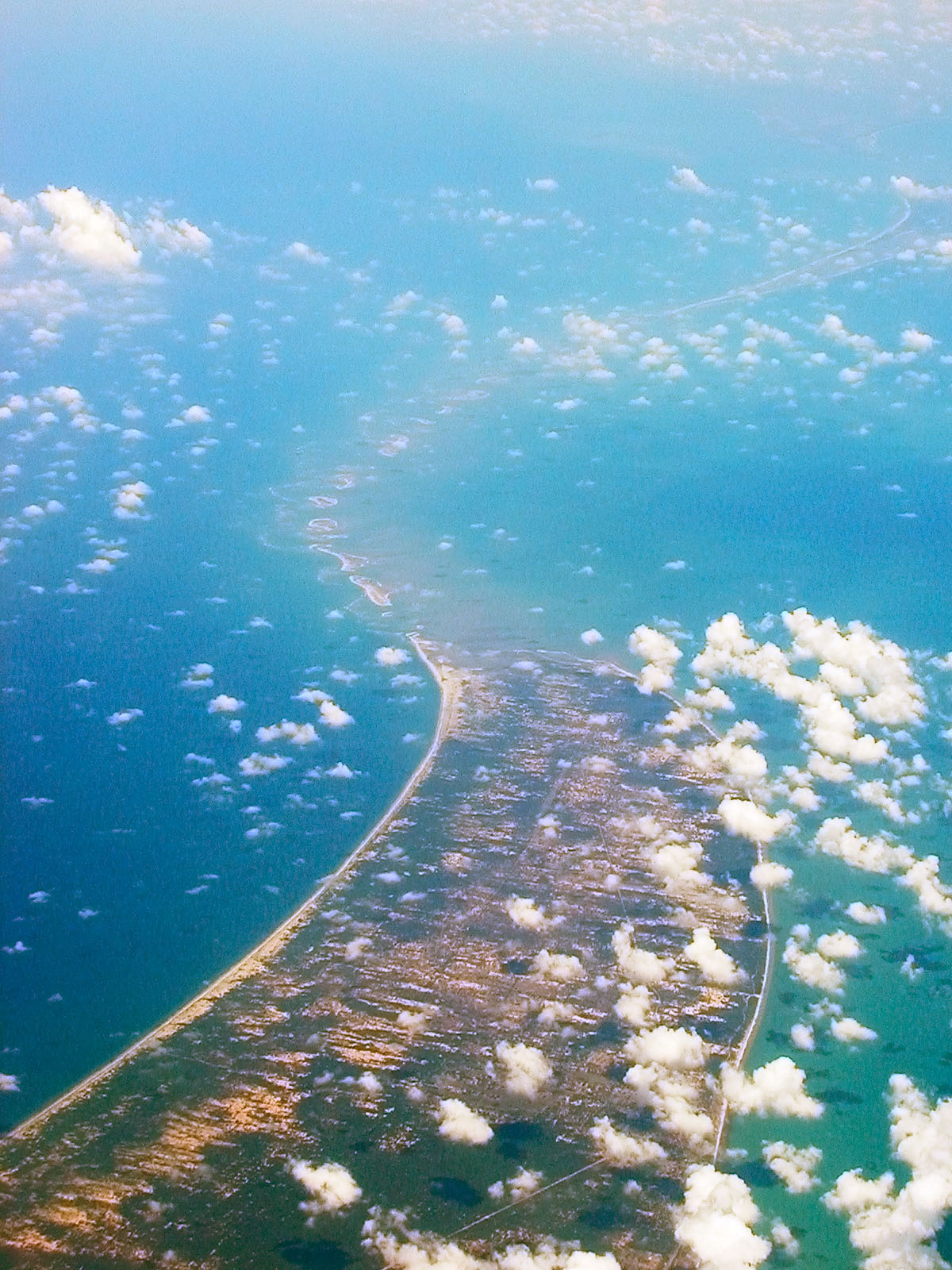
No other mountain in the world is revered by as many different religions as Sri Pada. It is known as Al Rohoun to Arabs, Svargarohanam to Tamils, and Adam's Peak to English speakers. Even before Bhuddists arrived at Sri Pada (or any part of Sri Lanka, the island south of the Indian peninsula) the mountain had religious significance. An ancient and mysterious footprint was carved into rock near the mountain's peak. Abrahamic religions interpreted this as Adam's footprint, Bhuddists see it as a mark left by Bhudda himself during one of his many journeys to Sri Lanka.

Thirty miles of tiny islands seperate Sri Lanka from India. While geologists, oceanogaphers, and historians cannot agree on the age of the formation, most agree that it is a man-made structure. Hindus call it Rama's Bridge after the popular epic hero of Hinduism. Westerners typically refer to it as Adam's Bridge in order to tie together the region's religious metaphors. The water is typically shallow between these limestone islands (rarely greater than 30 feet) - this would presumably have aided human movement between India and Sri Lanka.

The Indian government has started a dredging project through the narrow and shallow strait. Although people have opposed the project on religious and environmental grounds their objections fell on deaf ears. It is officially known as the Sethusamudram Shipping Canal Project.

10.20.2007

Retracing the footsteps of Alexander


This BBC documentary attempts to follow in the "Footsteps of Alexander" (the Great, as he is known in the West). You can watch the entire thing on YouTube.

The two "webisodes" above highlight Alexander's truly earth-changing force. The island city of Tyre resisted his authority in 332 BC. Alexander ordered his army to build a causeway from the mainland to the Phonecian city (in modern Lebanon). The earthworks took seven months but had the desired effect. Alexander took over the city and essentially attached it to the shore. The 6/10 mile long road collected silt from sea currents and transformed the island city into a peninsular city.

Another video in this series discusses the Egyptian city of Alexandria far more eloquently than I can. Many cities throughout the Middle East and Central Asia bear his name. This map shows where a few of them are located.

10.19.2007

A Tale of Two Monuments


spire, originally uploaded by Peanut99.

The wedge on the right part of that photo is not an errant needle. It is the Dublin Spire, officially known as the "Monument of Light." At 400 feet tall this stainless steel spike punctures the skyline of a mostly horizontal city.

What is truly spectacular about the Spire is that it stands on the site of Nelson's Pillar. An IRA bomb demolished the top part of the Pillar in 1966 - nobody was hurt or killed by the blast. In fact, many Irish seemed happy that the monument to their British colonial past had suffered such a blow. Several folk-style songs, such as Up Went Nelson, commended the bombers and quickly rose to the top of the Irish radio.

One early morning in the year of 'sixty six,
A band of Irish laddies were knocking up some tricks,
They thought Horatio Nelson had over stayed a mite,
So they helped him on his way with some sticks of gelignite.

While the Spire has its own share of detractors, it is not nearly as unpopular as its predecessor. There is no "visitors center" or other means of interpretation on the site. A coil of metal at street-level is said to signify prehistoric Celtic megaliths. Beyond that the site is entirely void of description. As Witold Rybczynski says, the Spire "gains its power from its engineering, rather than from symbolism."

10.13.2007

Rule of the East


Vladivostok Station., originally uploaded by chimpsonfilm.

The Vladivostok Terminal of the Trans Siberian Railway is an elegant structure. It is eight time zones and several days' journey away from it's opposite terminus.

9.07.2007

8-Bit Graffiti


does this really need a title?, originally uploaded by Bernat_83.

Fixed-width, or monospace, fonts wouldn't exist if not for the invention of the typewriter. While many people claim to have invented the first typewriter it was first manufactured in Central New York. L.C. Smith, Corona, and Morse Chain Company were among the first to build typewriters for the general public.

Manual typewriters used these fixed-width fonts to simplify the key-to-print machinery. These fonts were adopted by early word processing programs and redrawn to for dot-matrix printers.

Nostalgic feelings run deep for these digital relics such as this Graffiti example, ASCII, and other 8-bit art.

9.05.2007

Factories of Art


dafen, originally uploaded by lila75.

The gates to the village of Dafen are marked by this giant sculpture. Dafen has gained international fame and noterity as a hub for art reproductions. Cribbing works like the Mona Lisa requires a great deal of technical skill.

In vast studios Dafen's artists create their reproductions in an assembly line fashion. Each artist adds only a few brush strokes, ones that he or she has perfected. The end result is a stunningly high quality painting that is difficult to differentiate from the original.

Dafen is located outside Shenzhen, a large Chinese city near Hong Kong. Each year more artists flock to the village. Spiegel estimates that over 5 million oil paintings come out of Dafen each year.

9.04.2007

Australia's Meeting Place: Canberra


Nighty Sky in Canberra, originally uploaded by OzBandit.

The largest and best known planned city in Australia is its capital: Canberra. Around 1900 Aussies debated whether to put the capital in Sydney or Melbourne, the two largest cities on the continent. Since it was located between the two cities Canberra was picked as a compromise in 1908. Currently it is the largest inland city in Australia.

The name of Canberra comes from the Ngunnawal and Walgalu tribes who inhabited the area. It translates to "meeting place." The nomadic tribes gathered around present-day Canberra to meet the annual Bogong moth migration.

"As the moths migrate southwards, their world collides with human society. Their route, followed for thousands of generations past, now passes over the bright lights of Canberra and other large cities. The lights fool the moths into behaving as if the sun is coming up. Their natural response is to dive down to the ground to find a dark place before the heat of the day sets in, and suddenly there are moths everywhere."
Bogong moths travel over 900 miles during their short lives. The aboriginal Australians met the moth flock every spring to feast on them. According to anthropologists the moths were mashed into a pasty meal that tasted like walnuts. The giant swarm of moths is critical for the ecosystem of the Australian Alps; they are a food source for many animals.

The design of Canberra was selected from an international competition in 1911. Chicago architect Walter Burley Griffin along with his partner and wife, Marion Mahony Griffin won the contract. Both had worked for Frank Lloyd Wright. The influence of his prairie style and the City Beautiful movement is evident in their designs.

8.29.2007

Jeepney


Jeepney, originally uploaded by Raphael Borja.

At least one resident of Manila is sick of his city's portrayal in popular media. Carlos Celdran, a tour guide in Manila, expressed his anger at outsiders who come to the Philippines in search of only poverty, slums, and desperation. In response to a photographer searching for Manila's "bat people" he wrote,

" I have always been so confused about why is it that the negative side of Manila is what a lot of photographers and journalists are interested in. My request to these people in the past to show a balanced picture of Manila (a good side, as well as a bad one), has always been met with confused stares. It's as if Philippine middle class values, arts, heritage, and beauty in the "normal" sense isn't beautiful to them or worse, it won't sell. To many, the Philippines has become the cliche/easy picking for the grotesque and I will not enjoin this cause. Once again, my apologies if I offended you or seem a little politicized or upset, but poverty and bat people is NOT ALL that we are about." (via MetaFilter)
The photograph above is a "Jeepney." At the end of World War II, the American military abandoned hundreds of jeeps on the main island of the Philippines. Lavishly decorated and often crammed full of passengers these vehicles act like buses on the streets of Manila.

The name "Manila" derives from the Tagalog word "maynilad", a reference the white mangrove-like plants named "nilads". Spanish conquistador Miguel López de Legazpi took over Manila in 1570 ousting the Muslim Sultanate that originally settled it. Since that time the city had been under the control of the British and Americans before gaining independence in 1946.

8.26.2007

Korea's Ginseng Market


/root - IMG_1040, originally uploaded by jeroen020.

The Latin name for the ginseng plant is Panax which means "all-heal." Carl Linnaeus, the man responsible for all those Latin names, had heard about the reported healing attributes of ginseng as the Chinese applied it. Since then the plant has become a staple of the alternative-medicine market. Ginseng boosters claim that the plant is effective against conditions as diverse as diabetes, male impotence, allergies, and cancer.

Because the actual chemical components of the ginseng plant cannot be patented for pharmaceutical purposes not much quantitative research has been preformed on its effects. Nevertheless many people in the East and West believe in the healing effects of ginseng. Some extremely wealthy Koreans are willing to pay many thousands of dollars for rare, wild ginseng plants.

The New York Times just reported that a 8.3 ounce ginseng plant sold for $65,000. The person who discovered the Lexus-of-plants claimed to have a spiritual experience before finding the plant on Mt. Sobaek, seeing "three pillars of fire." The struggling South Korean economy has driven many people into the mountains searching for the elusive root-plants.

The picture above is of Namdaemon market in Seoul, South Korea. Ginseng roots are preserved in jars and left on display for the market's patrons.

8.25.2007

Seven (Several) Seas

One of the categories of Anna Sova's online color pallets (for wall finishes) is called "7/10 of the planet." The description goes on to list the seven seas of classical antiquity:

  • Red Sea
  • Mediterranean Sea
  • Persian Gulf
  • Black Sea
  • Adriatic Sea
  • Caspian Sea
  • Indian Ocean
Curious about which cartographer coined the term I started to do some research. While I'm not trying to criticize the marketing staff at Anna Sova (who, in my opinion, have done a fantastic job of cataloging their many color options!) they might be a bit off about their listing.

At least four ancient nations described "seven seas," Hindus, Chinese, Persians, and Romans all called various bodies of water by this ambiguous name. The Romans dubbed the seven salty lagoons surrounding Venice such; the Hindus used it for the Punjab River; the Persians did the same for the Oxus River. This begs the question: why always seven?

Seven is held up as a sacred number by people around the world. There are seven days in a week, seven deadly sins, seven wonders of the world, seven "naked eye" solar bodies. Some people even suggest that seven is analogous to several: the use of the number seven might be a way of acknowledging the vast and unpredictable nature of water.

Rudyard Kipling might be responsible for the modern usage of the term. In 1896 he titled a collection of poems The Seven Seas. Nevertheless,
modern attempts to mold the oceans of the world to the number seven seem contrived (dividing the Atlantic Pacific into North and South, for instance).

8.24.2007

The Polar Bear Memorial

You won't find it in Arkhangelsk, the location of the "campaign." It's in Troy, Michigan, a suburb of Detroit. Allied commanders decided to deploy soldiers to Arkhangelsk after the conclusion of World War I. Their justification for this superbly dumb expedition was to defeat the Bolshevik armies and rejoin with the Czech Legion.

Fifteen hundred infantrymen from Michigan and Wisconsin were sent to fight over some of the coldest and most inhospitable terrain in the Northern Hemisphere. They joined an additional thirty five hundred British and French soldiers along the Murmansk coast; facing the White Sea and the Arctic Ocean. Their mission proved to be futile and directionless. Extreme cold, a shortage of supplies and the Spanish Flu combined with their unclear objectives deteriorated the troops morale.

After several public calls to bring "Detroit's Own" back home Woodrow Wilson (and the other Allied commanders) decided to pull the plug on the "Polar Bear Expedition." By the early summer of 1919 the soldiers began to return. It would take another ten years for the Russians to return the remains of the American dead. The Polar Bear Memorial in Troy has a quote from Stephen Decatur engraved on its base: "Our Country, in her intercourse with foreign nations, may she always be in the right; but our Country, right or wrong."

8.23.2007

The Great Lake of Cambodia


Reflection of living, originally uploaded by siggito.

High in the Chinese Himalayas the Mekong River begins its long journey to the sea. Parts of the river are strongly affected by the tropical climates of Southeast Asia. Melting snow combined with monsoons bring the river and its tributaries far beyond their dry season banks.

In Cambodia this torrential rain reverses the Mekong's flow. The water fills in the Tonlé Sap, or "Great Lake." During the dry season the small, marshy basin is at most around 3 feet deep. At the peak of the wet season the lake grows to six times its surface area and over sixty feet deep.

Less ingenious people might think of this region as uninhabitable. Cambodians, however, have built homes, businesses, churches and whole towns in the Tonlé Sap area. The house pictured above is designed to float with the rising waters. Other buildings are built on tall stilts (some over 30 feet tall).

Furthermore, the Tonlé Sap is a critical part of the region's economy. The lake/river water is ideal for fish breeding. Cambodians harvest shrimp, riel, and many other kinds of seafood from the pulsing lake.

8.19.2007

City on Fire


Urbanity, originally uploaded by Piax.

Last Summer the conflict along the Israel-Lebanon border drew the world's attention. Hezbollah militants provoked Israel into launching a full scale war against its northern neighbor. Unexploded cluster bombs in southern Lebanon remain after the month-long war. These places remain abandoned for fear of unexpected detonations.

Although most of the fighting took place near the border, Lebanon's largest city and capital was also bombed by Israeli forces. The ancient city that modern Beirut is built over was poorly understood until archaeologists returned following Lebanon's 15 year civil war. They uncovered layers of Ottoman, Roman, Phoenician, and Hellenistic civilizations.

8.15.2007

How did we get here?

Which of these is closer to reality? Which is more fun to watch?


I can't give you the answers. You have to decide for yourself. Via Great Lakes Guy and Paleo Future
.

7.27.2007

America's Moving Adventure


Fly Fishing, originally uploaded by champy1013.

I love U-Haul's slogan for its ambiguity. The reference to moving either implies hauling your junk across the country in an automobile or trailer or being emotionally moved by some unnamed force.

I will be on the move next week so posting will be light. Above is a picture of where I'm moving: Ithaca, New York.

Yes, it's very gouda!


Market Square, Woerden, originally uploaded by groggy doggy.

Of the four cheese markets in the Netherlands only the one in Woerden is authentic. Here, dairy farmers who produce cheese set the sale price with a market foreman (marktmeester) in an open setting. The other three cheese markets (kaasmarkt) are historical reproductions for tourists. They are located in the cities of Alkmaar, Edam, and Gouda.

The Gouda you find at the grocery store did not come from Gouda in the Netherlands unless it says "Noord-Hollandse Gouda." The European Union has strict standards on how place names are used on food labels. Strangely, the city of Gouda is not located in North (Noord) Holland, but South Holland - somebody should alert the PDO/PGI/TSG.

7.26.2007

Buried Treasure, c. 1914


DSC_2153, originally uploaded by ichimusai.

Southern Europe is cited in countless history books as the fuse that ignited World War I. Macedonia (also called F.Y.R.O.M.) was under the control of the Central Powers during the war. The French army fought throughout the area. Joined by British and Serbian forces they attempted to repel Austrian, German and Bulgarian armies.

Fifteen years ago a farmer near Gradesnica (a town in Novaci, Macedonia) happened upon some old glass bottles. According to the Independent,

The cases appear to be dotted all over Gradesnica, like bones buried by dogs. One cache was unearthed by farmers plowing their fields. Two more were found when a glint of metal in the sand of an old trench caught one farmer's eye.

The cases were filled with wines and cognacs from World War I. French connoisseurs are paying enormous sums for these rare and spectacular bottles of cognac (the wine has gone bad, apparently). A bottle was recently sold for 5,000 euros. (via Chow)

Macedonia is negotiating for the use of its name. The dispute between Greek Macedonians and ethnic Macedonians ignites passions but doesn't generally affect the commerce and cooperation between the two nations. Greek Macedonians want to keep the name "Macedonia" for their provinces which go by the same name. They believe that it would be incorrect to allow Slavic Macedonians the exclusive use of the name. The Greeks want their neighbor to be called the Former Yugoslav Republic of Macedonia (FYROM). The dispute is in negotiation through the United Nations.

The city pictured above is the capital of Macedonia (FYROM), Skopje. Greeks use this name to refer to the entire nation in order to avoid confusion with their Macedonian province. Linguists would say that the Greeks are using a "metonym."

7.24.2007

Iran in Pictures


Yazd, panoràmica (2), originally uploaded by Sebastià Giralt.

The infamous autocratic regime running the Iranian government would like to have a total monopoly on photography. Nevertheless, last month the Iranian Flickr group celebrated their one-year anniversary. In spite of the national internet provider blocking flickr.com, these dedicated Iranians have been posting pictures of their nation for thirteen months now.

The city pictured here is called Yzad. Around a half-million people call this Central-Asian city home. Yzad is named after a Sasanian King who ruled in the beginning of the 5th century. Yazdegerd I, as he was called, was apparently a terrible leader, one account says this of him,

When he consolidated his power, he so greatly belittled the nobility oppressed the weak and shed so much blood that his subjects prayed to God to end his tyranny. He earned the epithet "the Sinner"

In the current asymmetrical, image-centric conflict, Iran's citizens might be gaining an upper-hand. Recently created webpages claiming to show Iran have "gone viral" in attempts to show what Iran really looks like.

Check the previous Toponymy post on The Fire Temple or Agiary to learn more about Zoroastrianism and the religious history of Central-Asia.